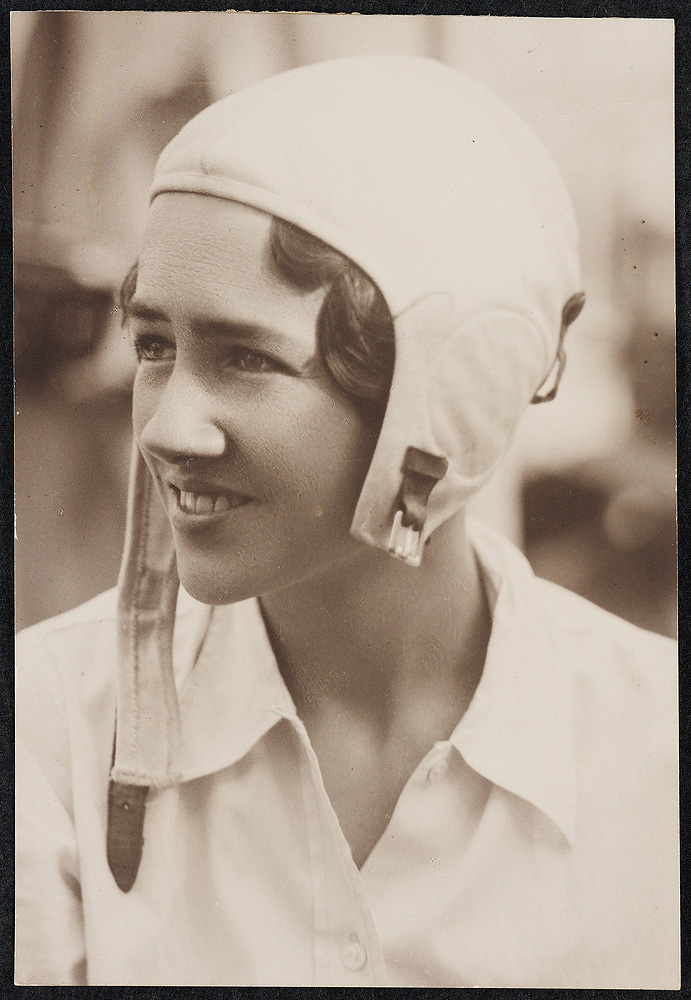
‘…every woman needs ‘a room of her own’ — not simply to separate her from husband and children but also to separate her two selves...’ (1978) echoing Virginia Woolf at Smith College USA in a speech entitled 'The Journey Not the Arrival’ : Anne Morrow Lindbergh
As is the way of things, I found a battered blue hardback book on the bookshelves in my little study. It had a label stuck on the spine with faded writing. Anne Morrow Lindbergh: Gift from the Sea. It is written in my writing, so this must be my book. But I didn’t put it there. We did have a big sort out of books both upstairs and down but this book certainly didn’t emerge. Perhaps it’s been placed by the household ghost (another story there…) who is urging me to read it, despairing of my present state of being which rather resembles an over-wound clock.
This book is the modest 1955 edition of a book which has sold, allegedly, over three million copies in 45 different languages. There have been many editions since and I think it is still in print. Up till this week it was never in my mind. I might have owned it but I never read it.
Of course people of my generation are aware of the Lindberghs. There have been books and films … When I mentioned the name my friend Gillian said, ‘Oh yes! James Stewart! In The Spirit of St Louis’ This was the 1957 film telling the story of fold that followed Lindbergh’s 33 hour solo transatlantic flight in 1927. He was a hero of the inter-war generation.
In her memoir Anne Morrow Lindberg tells us of the tall, lanky, handsome figure towering over social gatherings when she as a very young woman, fell in love with this apparently shy quite hero. He taught her to fly and she flew with him on expeditions charting new routes for airlines. They had several children but in 1932 suffered the tragedy of the world wide exposure during the kidnap and murder of their eldest son.
Lindbergh, impressed technological superiority of Nazi Germany, as late as In 1938, accepted a German medal of honour from Hermann Goering and proceeded to accuse British, Jewish, and pro-Roosevelt groups were leading America into war. He was later reinstated and took active part in the anti-German effort.
Anne seems to have lived quietly alongside all this surrogate adulation, fame, notoriety and drama, being the good mother and wife and writing of her own endeavours in North to The Orient, written between 1931 and 1935.
But then, visiting an island, trying to find inner piece she started to write, separating her ‘two selves'. She says I began these pages for myself, in order to think out my own particular pattern of living, my own individual palace of life, work and human relationships. And since I think best with a pencil in my hand I started naturally to write.’ (Anne Morrow Lindbergh: a Gift from The Sea.)
And this she did, using shells as the symbols of the progress of her thinking.
The book must have hit a universal chord – particularly among women – because as I said over three million copies have been read in 45 different languages.
 If you are interested I have written about what Gift from The Sea says, and how AML says it, on my writing blog A Life Twice Tasted. If you are interested I have written about what Gift from The Sea says, and how AML says it, on my writing blog A Life Twice Tasted. |
Showing posts with label Power of Books. Show all posts
Showing posts with label Power of Books. Show all posts
Saturday, 31 March 2012
The Two Selves of Anne Morrow Lindbergh.


Sunday, 19 February 2012
Guest Avril Joy reflects on Jeannette Winterson's New Book
I asked Avril Joy to reflect on Jeanette Winterson's new book.
Avril Says: 'It’s difficult to be objective about a book that grabs you by the throat from the word go and doesn’t loosen its hold until you reach the end. Jeanette Winterson’s memoir Why Be Happy When You Could Be Normal? is one of those books.
The Devil , the Cold War and Mcarthyism are all invoked on page one, along with the biggest monster of all: Mrs Winterson ( we first met her in Oranges Are Not The Only Fruit -occasionally referred to as my mother) The woman who kept a revolver in the duster drawer, and the bullets in a tin of Pledge. The woman who wore face powder to keep herself nice but not lipstick – too fast and loose: who weighed twenty stone; who had two sets of false teeth - matt for everyday and a pearlised set for best- and would have her daughter beaten to order by her husband.
 Not surprisingly Mrs Winterson, Jeanette Winterson’s adoptive mother, dominates this book and the memoir charts Winterson’s struggle to survive; a struggle that makes her the bare-knuckle fighter that she is.
The tone is tough and uncompromising, the pace fast, as Winterson weaves deftly back and forth in time. Despite the savagery of her childhood she is never sorry for herself: never blaming. She simply tells it as it was, without worrying about where memory comes from or about the things might be too painful to say.
For me as a writer one of the great achievements of the book is the way Winterson shows us (a wonderful extended example of the power of show don’t tell) that this cruel, sometimes bizarre, fanatically religious, and most definitely northern upbringing has made Winterson the person and the writer she is. She owns her past with a fierce pride and interestingly when she searches out and finds her birth mother - a difficult and painful process - surely we should make it easier than that! – she will not join with this woman in any criticism of ‘Mrs Winterson’. There was, despite everything, a bond had grown between them - a bond of unreliable love, … she was always striking me down, and then making a cake to put things right.
I understand such bonds and what they can do to you. I understand too what it is to have a mother who was never ordinary and how in the end it can be cause for celebration.
And Jeanette Winterson finds much to celebrate: the Glory Crusades for one, which meant setting off on your bike in the school holidays to wherever the tent was pitched to join the religious meeting; she could celebrate the books of course and her determined reading from A-Z in the literature section of the Accrington Public Library, And she could celebrate eventual acceptance to Oxford.
She conveys acutely the healing and restorative power of books and story – it is, she says the place where we meet each other on the steps, the way we can speak in tongues and not be silenced.
She lived for books. Books for me are a home. Books don’t make a home- they are one, in the sense that just as you do with a door, you open a book, and you go inside. Inside there is a different kind of time and a different kind of space – I understand that too, visiting the Library as I did sometimes twice a day, Then I discovered again what it was to step into another world when I began writing.
Why Be Happy When You Could Be Normal? has an urgent and at times disturbing narrative, none more so than when we witness Winterston’s unravelling and her attempted suicide; a time when language leaves her, when.. I was in the place before I had any language. The abandoned place. It is without doubt, especially given the media’s past intrusions into Winterson’s life, a book that took great courage to write.
And for now at least, the story ends in love. When the beautiful, intelligent and compassionate figure of Susi Orbach (who is there with love and thanks in the acknowledgements) walks into Winterson’s life we breathe a sigh of relief for her and feel that maybe at last she has been saved.
Like I said at the beginning it wasn’t easy being objective.
Avril Says: 'It’s difficult to be objective about a book that grabs you by the throat from the word go and doesn’t loosen its hold until you reach the end. Jeanette Winterson’s memoir Why Be Happy When You Could Be Normal? is one of those books.
The Devil , the Cold War and Mcarthyism are all invoked on page one, along with the biggest monster of all: Mrs Winterson ( we first met her in Oranges Are Not The Only Fruit -occasionally referred to as my mother) The woman who kept a revolver in the duster drawer, and the bullets in a tin of Pledge. The woman who wore face powder to keep herself nice but not lipstick – too fast and loose: who weighed twenty stone; who had two sets of false teeth - matt for everyday and a pearlised set for best- and would have her daughter beaten to order by her husband.
Not surprisingly Mrs Winterson, Jeanette Winterson’s adoptive mother, dominates this book and the memoir charts Winterson’s struggle to survive; a struggle that makes her the bare-knuckle fighter that she is. The tone is tough and uncompromising, the pace fast, as Winterson weaves deftly back and forth in time. Despite the savagery of her childhood she is never sorry for herself: never blaming. She simply tells it as it was, without worrying about where memory comes from or about the things might be too painful to say.
For me as a writer one of the great achievements of the book is the way Winterson shows us (a wonderful extended example of the power of show don’t tell) that this cruel, sometimes bizarre, fanatically religious, and most definitely northern upbringing has made Winterson the person and the writer she is. She owns her past with a fierce pride and interestingly when she searches out and finds her birth mother - a difficult and painful process - surely we should make it easier than that! – she will not join with this woman in any criticism of ‘Mrs Winterson’. There was, despite everything, a bond had grown between them - a bond of unreliable love, … she was always striking me down, and then making a cake to put things right.
I understand such bonds and what they can do to you. I understand too what it is to have a mother who was never ordinary and how in the end it can be cause for celebration.
And Jeanette Winterson finds much to celebrate: the Glory Crusades for one, which meant setting off on your bike in the school holidays to wherever the tent was pitched to join the religious meeting; she could celebrate the books of course and her determined reading from A-Z in the literature section of the Accrington Public Library, And she could celebrate eventual acceptance to Oxford.
She conveys acutely the healing and restorative power of books and story – it is, she says the place where we meet each other on the steps, the way we can speak in tongues and not be silenced.
She lived for books. Books for me are a home. Books don’t make a home- they are one, in the sense that just as you do with a door, you open a book, and you go inside. Inside there is a different kind of time and a different kind of space – I understand that too, visiting the Library as I did sometimes twice a day, Then I discovered again what it was to step into another world when I began writing.
Why Be Happy When You Could Be Normal? has an urgent and at times disturbing narrative, none more so than when we witness Winterston’s unravelling and her attempted suicide; a time when language leaves her, when.. I was in the place before I had any language. The abandoned place. It is without doubt, especially given the media’s past intrusions into Winterson’s life, a book that took great courage to write.
And for now at least, the story ends in love. When the beautiful, intelligent and compassionate figure of Susi Orbach (who is there with love and thanks in the acknowledgements) walks into Winterson’s life we breathe a sigh of relief for her and feel that maybe at last she has been saved.
Like I said at the beginning it wasn’t easy being objective.
Subscribe to:
Posts (Atom)